Watch Now
This story can be interpreted as a powerful allegory for abuse, living with PTSD, and surviving trauma. The "war" represents internal and external battles that survivors face, and the journey of returning to the world reflects the long process of healing and reclaiming one's life.
About This Film
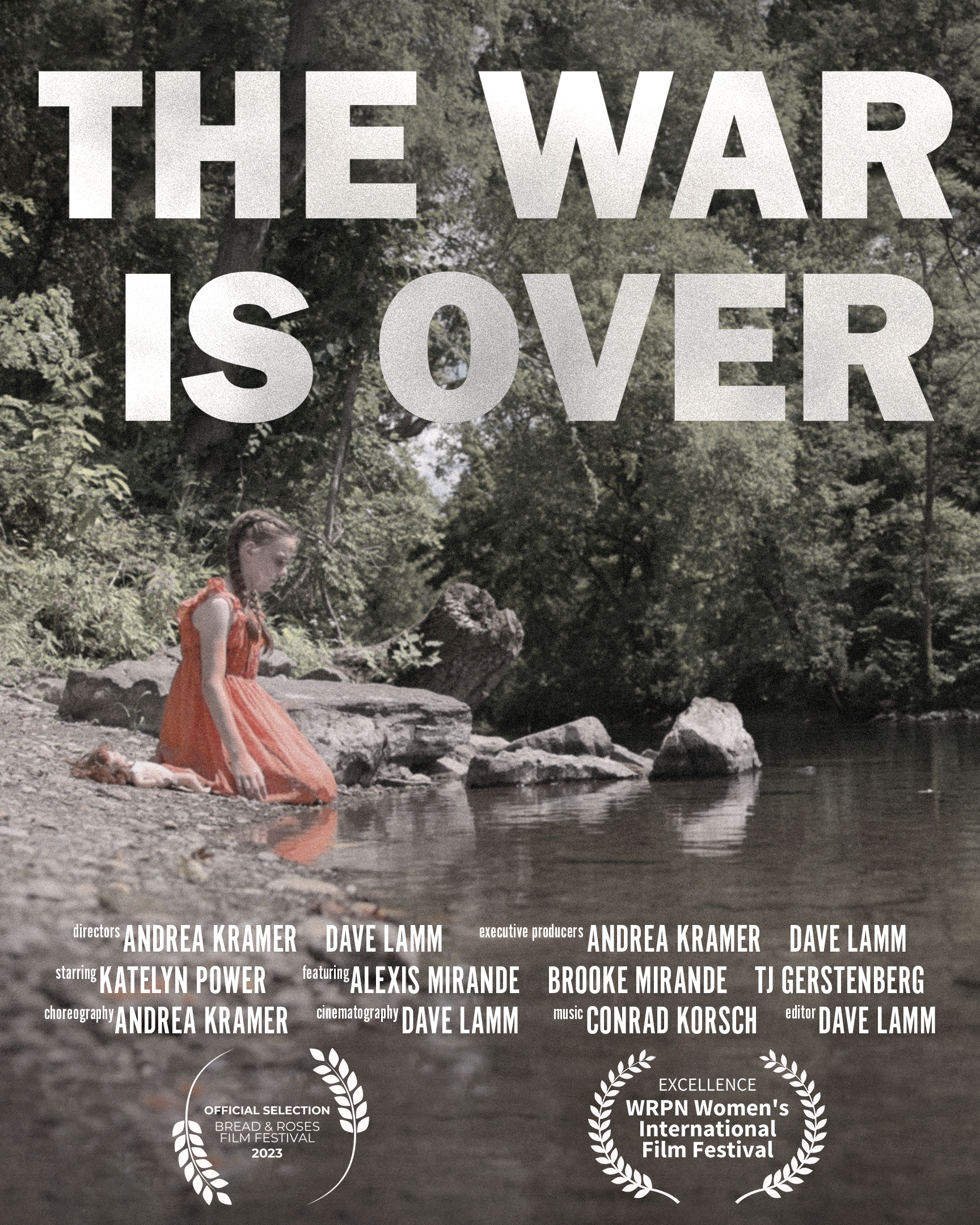
The War is Over is a deeply moving and symbolic short film that uses the metaphor of war to explore the lasting impact of trauma on survivors.
Directed by Andrea Kramer and Dave Lamm, with a screenplay by Andrea Kramer, this 3-minute piece packs profound emotional weight into its brief runtime. Through the powerful performance of lead actress Katelyn Power, alongside Alexis Mirande and Brooke Mirande, the film captures the disorientation, vulnerability, and resilience of someone emerging from prolonged trauma.
The narrative follows a young woman who, after nearly a decade of war, is finally released back into a world that has moved on without her. When the conflict began, she fled with her father and sister—a fragment of family holding onto survival. But war changes everyone, and the peace that follows is not simple relief but a new kind of battle: the struggle to rebuild, to reconnect, and to find meaning in a life that has been fundamentally altered.
What makes The War is Over particularly resonant is its allegorical framework. While the film can be viewed as a literal story about armed conflict, it powerfully represents the experiences of abuse survivors, those living with PTSD, and anyone who has endured prolonged trauma. The "war" becomes a metaphor for domestic violence, psychological abuse, or any situation where someone is held captive—physically or emotionally—for years.
The title itself is both hopeful and heartbreaking: "The war is over" suggests an ending, but for trauma survivors, the announcement of peace is just the beginning of a different kind of struggle. How do you return to normalcy when you've forgotten what normal feels like? How do you trust the world again when it failed to protect you?
Through careful cinematography and nuanced performances, the film explores these questions without offering easy answers. It acknowledges the complexity of healing—the fear that comes with freedom, the weight of memories that don't fade just because the danger has passed.
The War is Over is essential viewing for anyone interested in films that tackle difficult subjects with sensitivity and artistry. It's a meditation on survival, a portrait of resilience, and a reminder that healing is not linear—it's a journey with no clear endpoint, only the courage to keep moving forward.
🏆 Festival Recognition
-
🏆 Award of ExcellenceWRPN.tv Women's International Film Festival
-
⭐ Official SelectionBread and Roses Film Festival